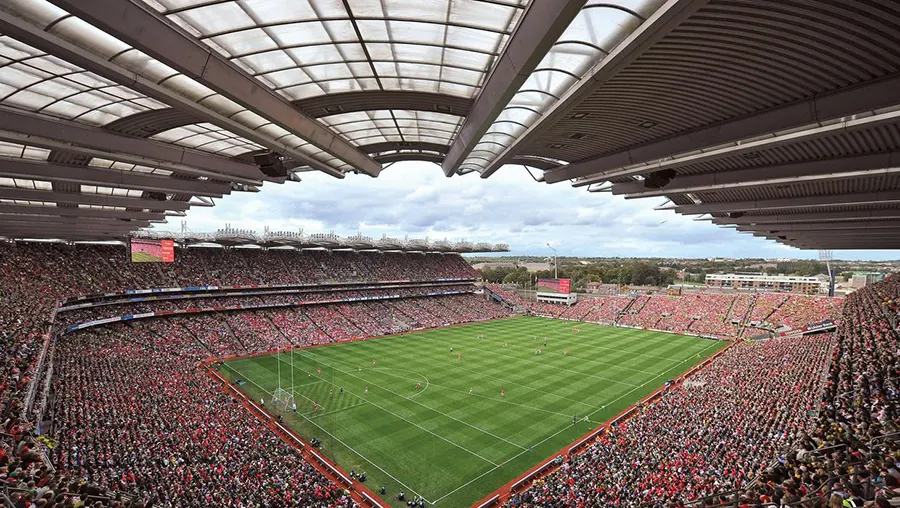
Croke Park is the home of Gaelic games and one of Ireland’s most important sporting and cultural landmarks. Located in Dublin 3, the stadium hosts major Gaelic football and hurling matches, international concerts, special events and fascinating visitor experiences throughout the year.
Known affectionately as “Croker” by generations of supporters, Croke Park is more than a sporting venue. It is the headquarters of the Gaelic Athletic Association, home to the GAA Museum and a place closely connected with Irish history, culture and community life.
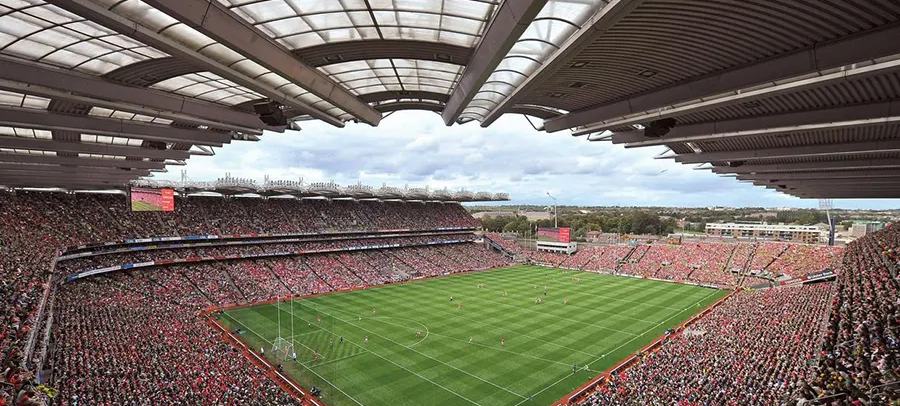
With a capacity of 82,300, Croke Park is Ireland’s largest sporting arena and one of the largest stadiums in Europe. It is best known as the venue for the All-Ireland Senior Football and Hurling Championship Finals—the biggest occasions in the Gaelic games calendar.
Croke Park has four principal stands: the Cusack Stand, Hogan Stand, Davin Stand and Dineen Hill 16. The Cusack, Hogan and Davin stands contain seated lower and upper tiers, while Hill 16 is traditionally a standing terrace.
The scale of the stadium creates an unforgettable atmosphere when tens of thousands of supporters arrive wearing their county colours. However, Croke Park can also be explored away from the excitement of match day through its museum and guided tours.
More information about the venue and its facilities is available on the official Croke Park website.
The grounds at Jones Road hosted sporting events before becoming the permanent home of the GAA. The first All-Ireland finals played at what is now Croke Park took place in March 1896, when Tipperary won both the football and hurling championships.
The GAA purchased the grounds in 1913. The stadium was subsequently named in honour of Archbishop Thomas Croke, the Association’s first patron. Since then, it has developed from relatively basic grounds with timber stands into the modern 82,300-capacity stadium seen today.
Over more than a century, Croke Park has witnessed many defining moments in Irish sport and history. Its development is explored in greater detail through the stadium’s official historical timeline.
Watching a match at Croke Park is one of the most distinctive sporting experiences Dublin has to offer. The stadium hosts Gaelic football, hurling and camogie fixtures, including championship matches, club finals and major inter-county contests.
Gaelic football combines elements of football, rugby and basketball, while hurling is a fast-moving stick-and-ball sport with ancient Irish origins. Both games are played by amateur athletes representing their clubs and counties.
Supporters travelling to a match should check their ticket carefully before arriving. Different stands have separate approach routes and entrances, and it may not be possible to move between sections after entering the stadium.
Fixture dates, entrance information and event-specific guidance are published through Croke Park and the GAA before each match.
Although closely associated with Gaelic games, Croke Park is also one of Dublin’s largest concert venues. Its summer concerts have attracted major Irish and international performers, bringing music fans from across Ireland and overseas to the capital.
The stadium can also accommodate other field sports, community occasions, conferences and special cultural events. Its layout and visitor arrangements can change considerably depending on the event, particularly when standing areas or seating are installed on the pitch.
For concerts, always check the promoter’s guidance regarding entrances, age restrictions, permitted items and accessible tickets before travelling.
The GAA Museum explores the history and development of Gaelic football, hurling, camogie and the Gaelic Athletic Association. Its collection preserves important sporting archives and artefacts, while its interactive games area gives visitors an opportunity to test some of their own Gaelic games skills.
The museum is an excellent introduction to Irish sporting culture, even for visitors who have never attended a GAA match. Admission is also included with the main stadium and Skyline tours.
Opening arrangements can be affected by matches and major stadium events, so check availability before visiting.
The Croke Park Stadium Tour takes visitors behind the scenes at Ireland’s largest stadium. Depending on operational requirements, a tour may include areas normally reserved for players and officials while explaining the traditions, stories and memorable moments associated with the venue.
The tour provides a different perspective on the stadium when the stands are empty, allowing visitors to appreciate its scale and learn how Croke Park operates on major match days.
Advance booking is advisable, particularly during weekends, school holidays and the championship season.
For panoramic views across Dublin, the Skyline Tour brings visitors onto a rooftop walkway approximately 17 storeys above the ground. From this elevated position, guides explain the city’s landmarks and stories while visitors look across the stadium and Dublin skyline.
Skyline Tour participants must be at least 12 years old, and anyone under 18 must be accompanied by an adult. The experience is weather-dependent and may not be suitable for everyone with a fear of heights.
Both the Stadium Tour and Skyline Tour include admission to the GAA Museum. Current options and tickets can be found through the GAA Museum and Tours page.
Croke Park is approximately a 15-minute walk from the northern side of Dublin city centre. Walking can be one of the easiest options on busy match and concert days, when roads around the stadium may be restricted.
Drumcondra is the closest railway station and is approximately five minutes from the stadium on foot.
Connolly Station is around a 15-to-20-minute walk away and connects with DART, commuter, Intercity and Luas services. Clontarf Road DART station is approximately 20 to 25 minutes away on foot.
Passengers using the Luas Red Line can travel to Connolly and walk to the stadium. On the Green Line, Parnell and Marlborough stops are approximately a 15-minute walk from Croke Park.
Numerous Dublin Bus services operate along Drumcondra Road and through the surrounding area. Routes and diversions can change on major event days, so check the Transport for Ireland journey planner before travelling.
Parking close to Croke Park is limited on match and concert days, and temporary traffic restrictions may operate around the stadium. Public transport or walking from the city centre is generally the most convenient option for large events.
Different parking arrangements apply to museum visits, stadium tours, conferences and match days. Check the official Croke Park transport information before beginning your journey.
Croke Park provides accessible seating, toilets, catering facilities and designated entrances. Additional facilities include a Changing Places room, welfare room, sensory room and audio-descriptive commentary for selected events.
Visitors with accessibility requirements are advised to arrange suitable tickets in advance. The Lower Cusack Stand is generally recommended for spectators with additional access needs who do not require a wheelchair space.
A specialist accessibility team is present on match days, and limited accessible parking may be available through an advance application process. Arrangements can differ for concerts and other special events, so contact the stadium or ticket provider before booking.
Detailed information is available from Croke Park’s accessibility guide.
Before attending a match, concert or tour:
Croke Park is located on Jones Road in Dublin 3, north of Dublin city centre. The GAA Museum and tour entrance is at the Cusack Stand on St Joseph’s Avenue.
Croke Park has a capacity of 82,300 spectators, making it Ireland’s largest sporting stadium.
Yes. Visitors can explore the GAA Museum or book a Stadium Tour or Skyline Tour. Availability may be restricted on match days and during major events.
Drumcondra is the nearest railway station and is approximately a five-minute walk from the stadium.
Croke Park primarily hosts Gaelic football, hurling and camogie matches. It also welcomes major concerts, other sporting fixtures, conferences and special cultural events.
Whether you are joining thousands of supporters for a championship match, attending a major outdoor concert or exploring the GAA Museum, Croke Park offers a uniquely Irish experience in the heart of Dublin.
Check the latest fixtures, tours and visitor information before travelling, as opening arrangements and access routes can change during matches, concerts and other large events.