General Post Office
Overview
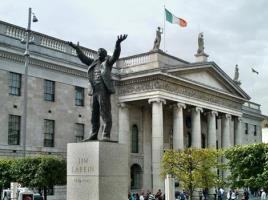
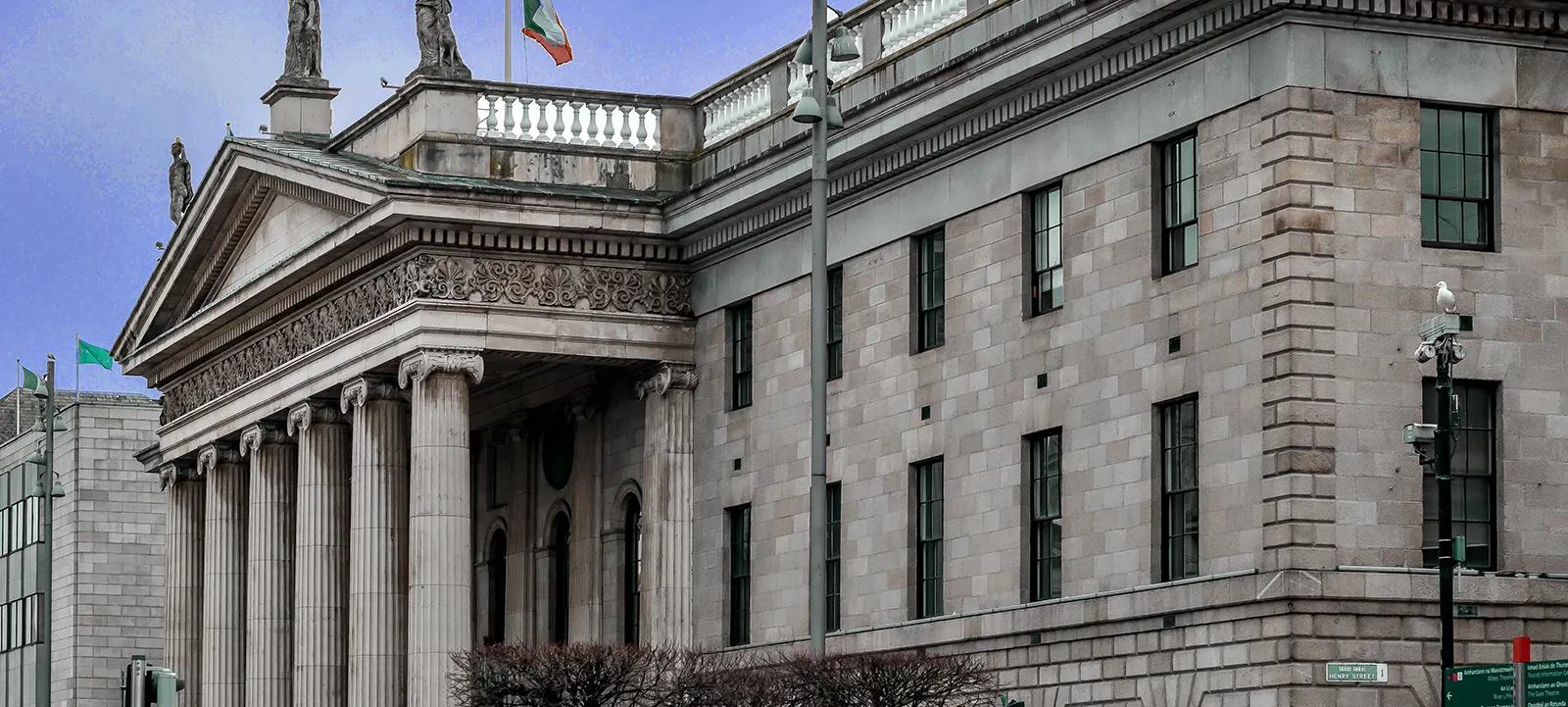
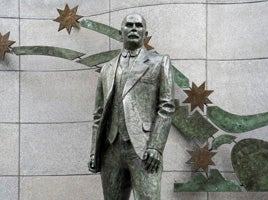
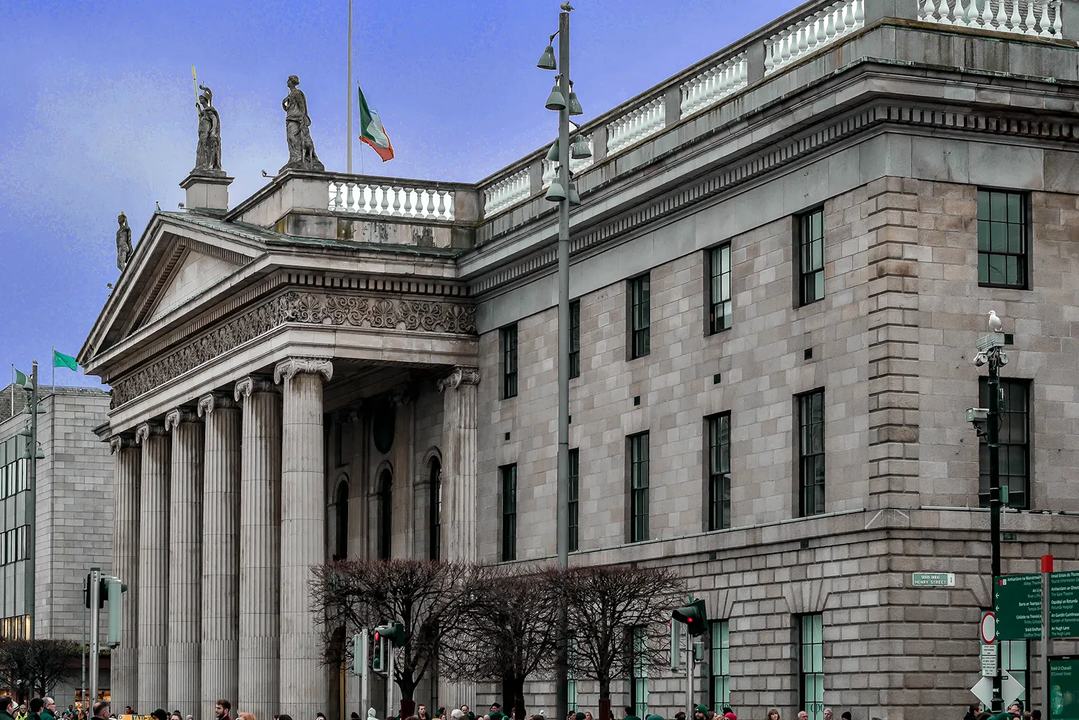
The iconic General Post Office in Dublin was designed by Francis Johnston in the Greek Revival Style in 1814. The main section of the building was made with Wicklow granite and the portico of Portland stone. Inside you will find a stunning bronze statue of The Death of Cúchulainn by Oliver Sheppard, placed there in 1935.
The GPO was important as the main stronghold of the Irish Volunteers in the 1916 Rising. The Witness History Museum is an excellent way to learn about the Rising. You can still see round bullet holes in the large columns outside. Since the building was destroyed except for the front portico and facade, it was rebuilt and reopened in 1929. It retained elements of the original design while introducing some attractive art deco features. The GPO is often a place of remembrance, protests and pageantry.
The General Post Office is remarkable not just for the special place it holds in Irish history and for its handsome architecture, but for the fact that after two centuries it continues to fulfil its original purpose. Today the General Post Office offers a wide range of monetary, government and postal services.
The café on site is an oasis of calm in the busy city with a lovely selection of food, fresh salads, quiches, sandwiches, soups and baked goods. The shop specialises in the Rising and has some unique Irish gifts.
The General Post Office (GPO) in Dublin is one of Ireland's most famous buildings. Located on O'Connell Street in the heart of Dublin, the GPO was built in 1818 and was originally used as a main post office and a government administration building. The building is a fine example of Georgian architecture, and features a classical portico and a domed rotunda. In 1916, during the Easter Rising, the GPO was the scene of heavy fighting between Irish rebels and British forces. The building was severely damaged during the fighting, and was later rebuilt and restored. Today, the GPO is a popular tourist attraction and a symbol of Ireland's struggle for independence. It is open to the public for tours and houses a museum dedicated to the history of the building and the events of the Easter Rising.
Opening hours
Monday - Saturday 8.30am - 6.00pm
Sunday - Closed
More Attractions
Browse all places